Vogue
Adria
How to incorporate art into your interior and avoid the most common mistakes
Experts reveal the most common mistakes and share tips on how art can transform an interior for Vogue Adria
Words Tina Kovačićek
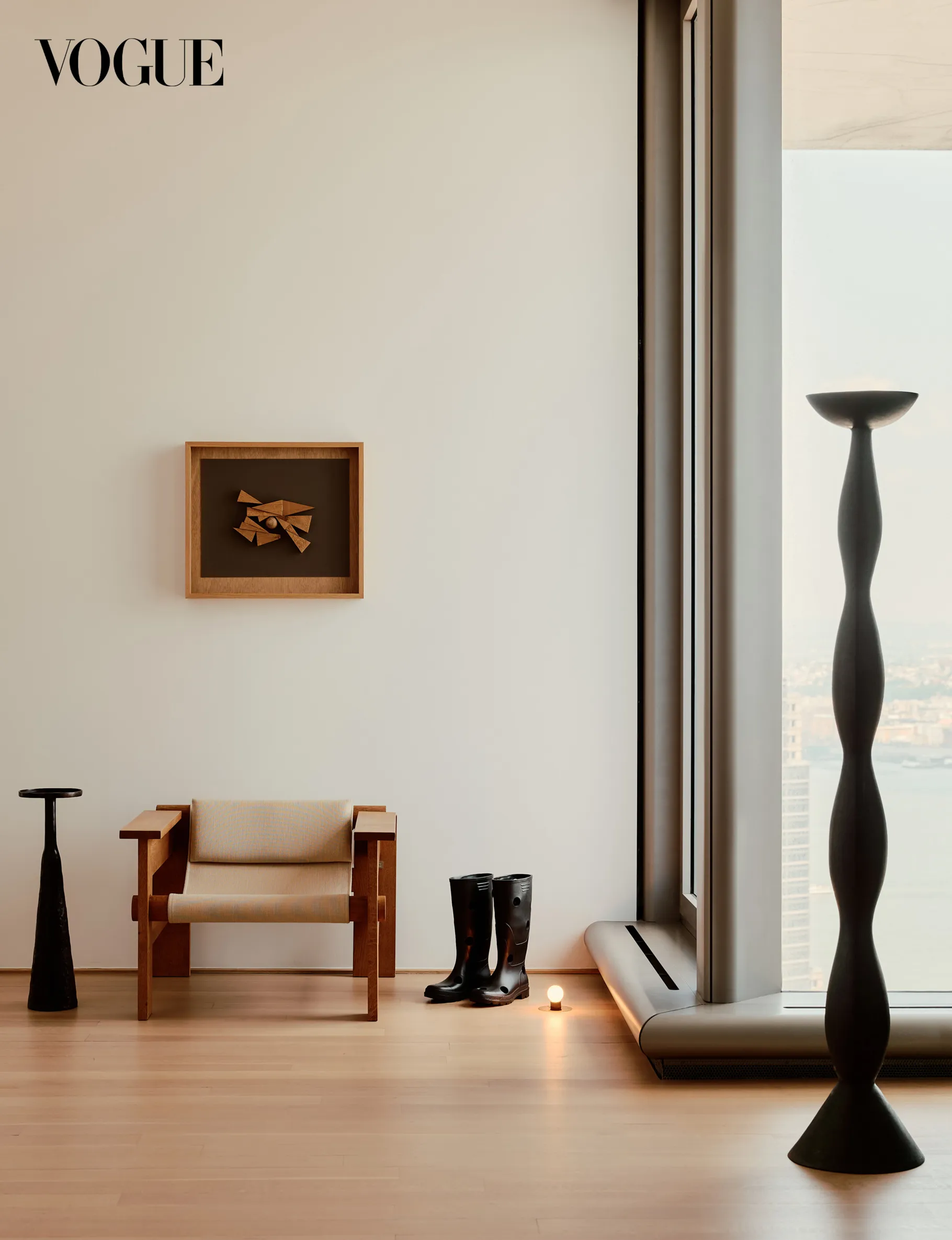
Photo William Jess Laird
Visit Vogue Adria

If you had asked me in my twenties how I imagined my dream home, it would have been a penthouse with high ceilings, plenty of light, of course, preferably two levels, with the lower one featuring an open-plan living room; in the middle, a conversation pit, and on the wall, that one key painting, large-format, say by Edo Murtić. Modest, I know. I am still working on making that idea come true (hope dies last!), but what I notice with age is that art is increasingly present in contemporary interiors. And we are no longer talking only about collectors, but about those who see it as an equal participant in home design

New York gallerists Nacho Polo and Robert Onuska, who recently renovated their apartment in Tribeca and filled it with art pieces, agree that art is no longer the final decorative layer, but an element that participates in shaping the identity, atmosphere and story of a home. “People are increasingly looking for works that tell a story or create a connection, rather than simply fitting into a specific colour palette. The most interesting interiors today are often those in which art reveals something about the people who live in them”


While talking to them about how to integrate art into a space without overdoing it, many more questions came to mind, so I also brought Sarajevo-based architect and artist Elmedina Imamović into the conversation, as well as designers Will Meyer and Gray Davis from the Meyer Davis studio. How to choose artworks that will not become a passing trend, what the most common mistakes are when integrating them into an interior, and how to work with large formats, lighting and different rooms in the home, read on below
Should an artwork be the starting point in designing a space?
There is no single formula, and in Polo and Onuska’s experience, the most successful projects often treated art as a key element from the very beginning. “An important artwork can set the atmosphere, palette or design direction, but a space can also develop organically. The most important thing is that art is integrated into the overall vision, rather than added afterwards”

Can one powerful artwork define an entire space?
The experts share a similar view; one powerful artwork can become the emotional and visual centre of a space, determining its atmosphere and design direction. “Some of the most striking interiors we have seen are architecturally very restrained, but one exceptional work completely transforms them. Great art has the ability to elevate everything around it,” explain Polo and Onuska, while Meyer adds: “In my home in Oaxaca, many of the artworks and handcrafted objects were sourced or commissioned locally and are an important part of what gives the house its strong regional connection. Those are precisely the elements visitors most often respond to”
What is the most common mistake people make when trying to include art in an interior?
The most common mistake happens when art is treated as decoration or brought into the process too late, instead of actively shaping the space from the very beginning. Polo and Onuska point out: “The most common mistake is choosing art solely so that it matches the furniture or finishes of a space; we call this ‘decorator art’. Art should bring personality, tension and individuality into a space. The most impactful interiors often contain works that introduce an unexpected perspective or emotional dimension”
A similar view is shared by Will Meyer, who emphasises the importance of including art early in the process: “An artwork can influence the proportions, colour and scale of a space, and guide the eye towards the place you notice first when you enter a room. When it is part of the conversation from the very beginning, art feels much more connected to the overall ambience”

How do you choose artworks that will not feel like a passing trend?
Meyer and Davis start from the idea of a lasting emotional bond and personal connection, rather than current popularity. “The works that leave the strongest impression are usually those with which people have a genuine connection, whether through the artist, the subject or simply through the feeling the work gives them,” Gray Davis tells Vogue Adria
When decorating their own home, Polo and Onuska tried to answer a simple question: “Would we be just as excited to live with this work ten years from now? If an artwork resonates on a deeper level, it is much more likely to remain important in your life”
What criteria would you recommend when buying the first significant artwork for a home?
“The first criterion should always be love for the work and a personal connection with it,” say Polo and Onuska, emphasising that you should primarily genuinely enjoy living with the work, rather than viewing it as an investment. They also add that it is always good to be familiar with the artist’s practice, what and who stands behind the work, and how it contributes to the atmosphere you want to create in your home. “A meaningful artwork should enrich everyday life, not just fill an empty wall”

Is it better to build an art collection gradually or invest in one major work?
As gallerists and owners of the STUDIOTWENTYSEVEN gallery, Polo and Onuska believe that gradually building a collection is the more fulfilling path. “That way, the collection can grow together with the owner’s tastes and experiences. Each acquisition becomes part of a broader story. Although one major work can lay the foundation for a collection, a thoughtful collection usually reflects years of research, curiosity and personal development. The most interesting collections rarely appear overnight”
How do you separate personal taste from the style of the interior?
“Personal taste should always lead the conversation,” say Polo and Onuska, pointing out that a well-designed home should reflect the people who live in it. “Design, in doing so, does not suppress individuality, but creates a framework in which it can come to the fore, through art that is authentic and in dialogue with the space. The goal is not uniformity, but harmony in which personal expression and thoughtful design meet naturally”


Is there a rule for how much art a space can “handle”?
A practical answer to this question comes from Elmedina Imamović of the ei__atelier studio, who says that there is no rule about the “exact amount” of art in a space. “It is important to achieve a balance between minimalism and maximalism, and to preserve the authenticity of the space in line with the users’ needs and the professional approach of architects and designers. Every space is unique, and art can be integrated in different ways, as long as the space remains functional, passable and pleasant to spend time in,” she tells Vogue Adria
How do you work with large formats in smaller apartments?
Imamović points out that the key lies in carefully choosing one dominant point that takes on the role of a statement wall, with a clearly defined sightline and balance with the rest of the space. “Art, in this sense, does not have to be only a canvas; it can include installations, photography or sculpture, but it should always be in dialogue with the furniture and decor through colour, form and contrast, in order to achieve a harmonious dynamic in a smaller space”
How important are lighting and positioning for the experience of an artwork?
Imamović emphasises that lighting and its positioning are crucial to the experience of an artwork, because they determine the hierarchy of the space and the way art is “read” within an interior. “Properly positioned light can emphasise the colours, textures and depth of a work, while in the case of installations, it creates additional layers through shadows and volume. At the same time, as the light changes throughout the day, the perception of art naturally transforms as well, making the space dynamic and alive”

Which spaces in the home do people most often overlook when it comes to art?
Art in interiors is most often overlooked in “transitional” and functional spaces such as hallways and bedrooms, but also in work and office environments, which often remain sterile, Imamović points out. “Precisely these spaces,” she emphasises, “have great potential for transformation through art, from bathrooms to offices, because they can gain character, atmosphere and an emotional layer. Although the focus is usually placed on the living room and kitchen, every part of a home or workspace can become equally representative through the thoughtful integration of artworks”
Which media do you currently consider particularly interesting for contemporary interiors?
Elmedina Imamović sees contemporary interiors through the fusion of three media, architecture, art and design, which overlap with one another and together shape the space as a whole. In her approach, visual records, sculptural and ceiling installations, as well as contemporary formats, are especially important. “I would particularly highlight interactive and multimedia installations, as well as digital projections, which open up a new dimension in the experience of space through sound and visuals.” Different media can give a space a unique character, while architecture as art, through them, becomes a platform that, with a good team of experts, can transform a space and improve everyday life”