LEDA LOW TABLE BY SALVADOR DALÍ 1935

LEDA LOW TABLE
BY SALVADOR DALÍ 1935

SIGNED, SERIAL NUMBER AND CERTIFICATE OF AUTHENTICITY
DALÍ COLLECTION

BRUSHED AND VARNISHED BRASS TOP
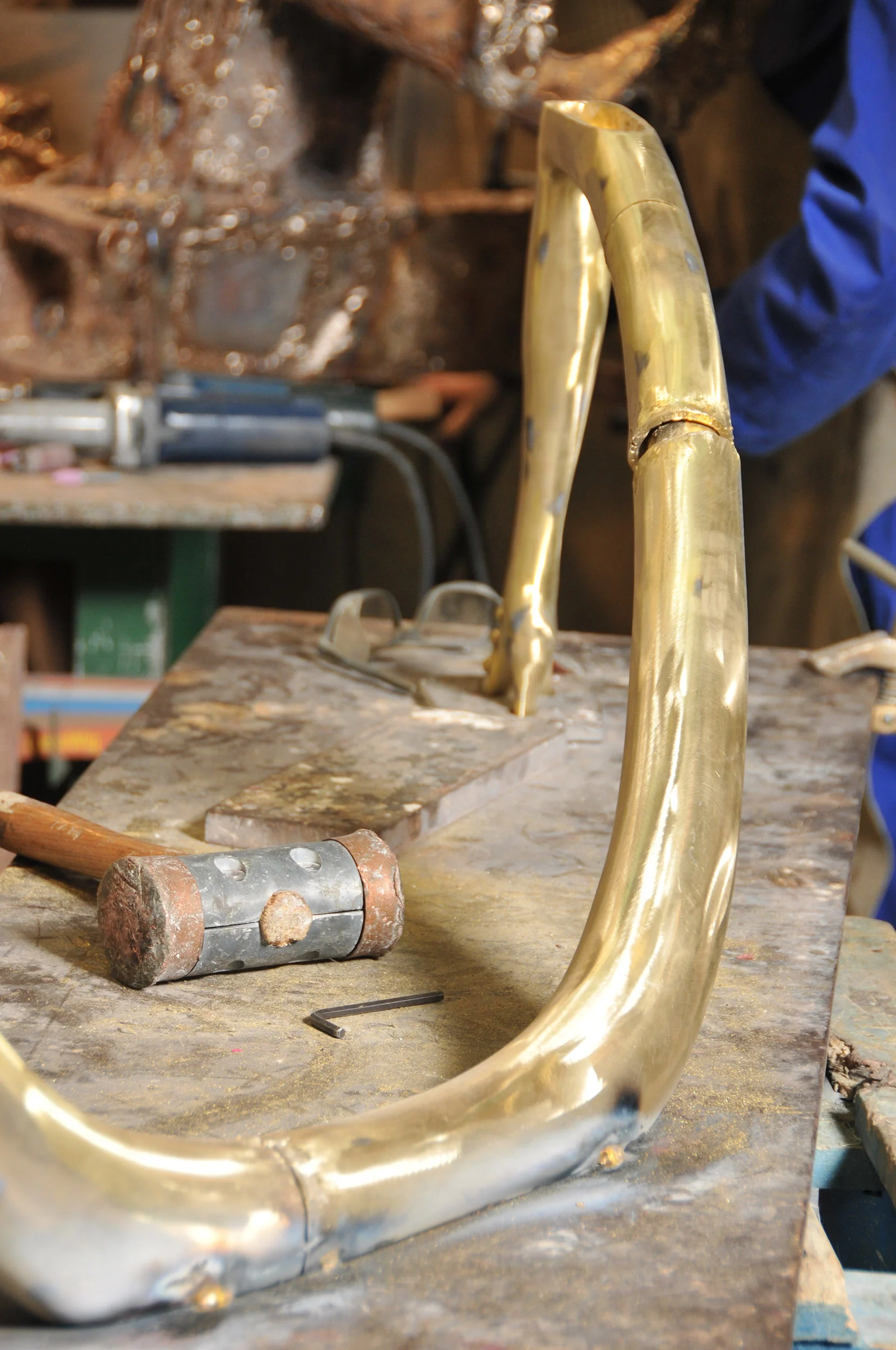
CAST BRASS VARNISHED BASE
CARRARA MARBLE EGG

IN H 36.2 W 70.8 D 27.1
CM H 61 W 190 D 51

HANDCRAFTED IN SPAIN BY BD BARCELONA

BIOGRAPHY
DOWNLOAD PRODUCT INFO
SALES INQUIRY

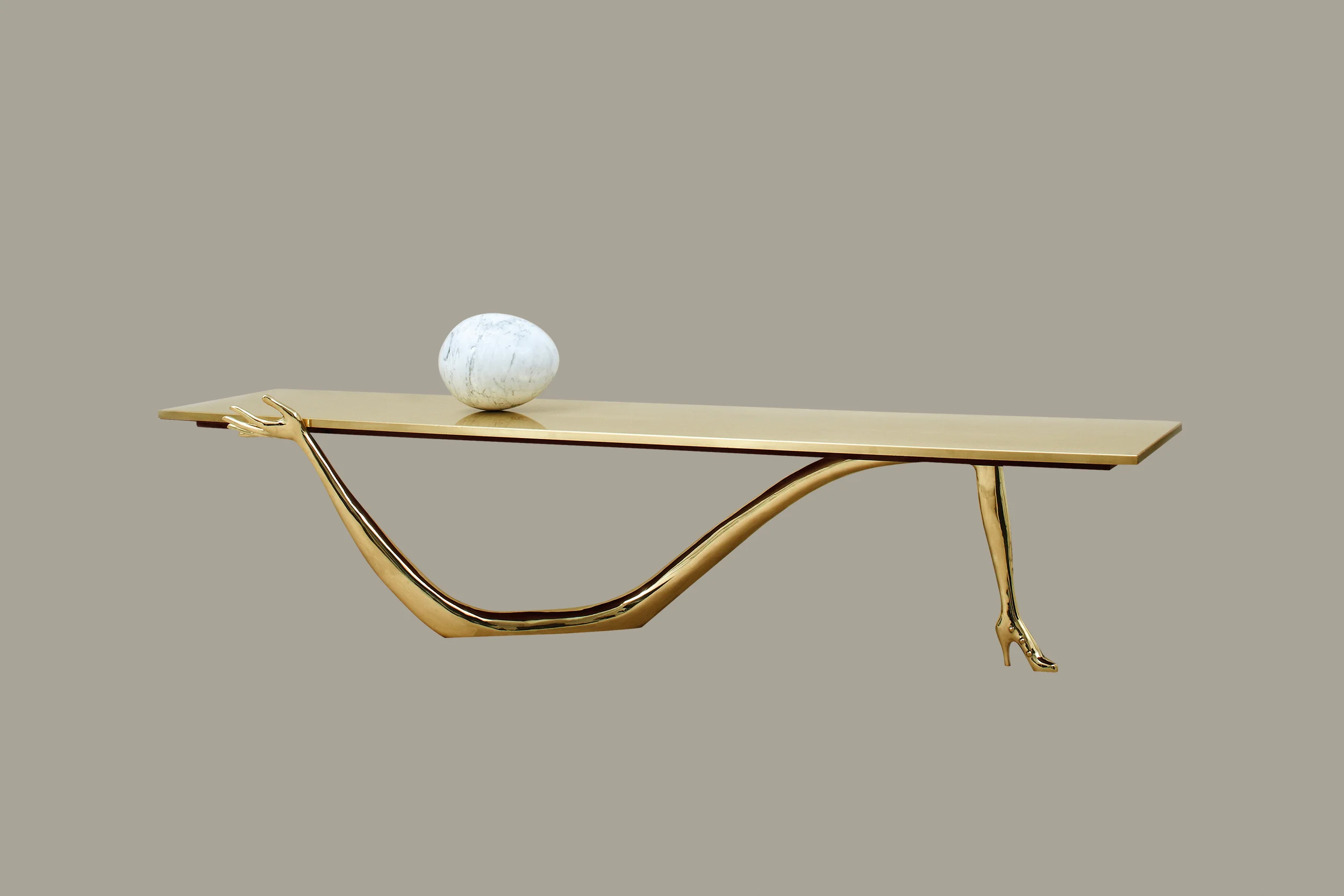
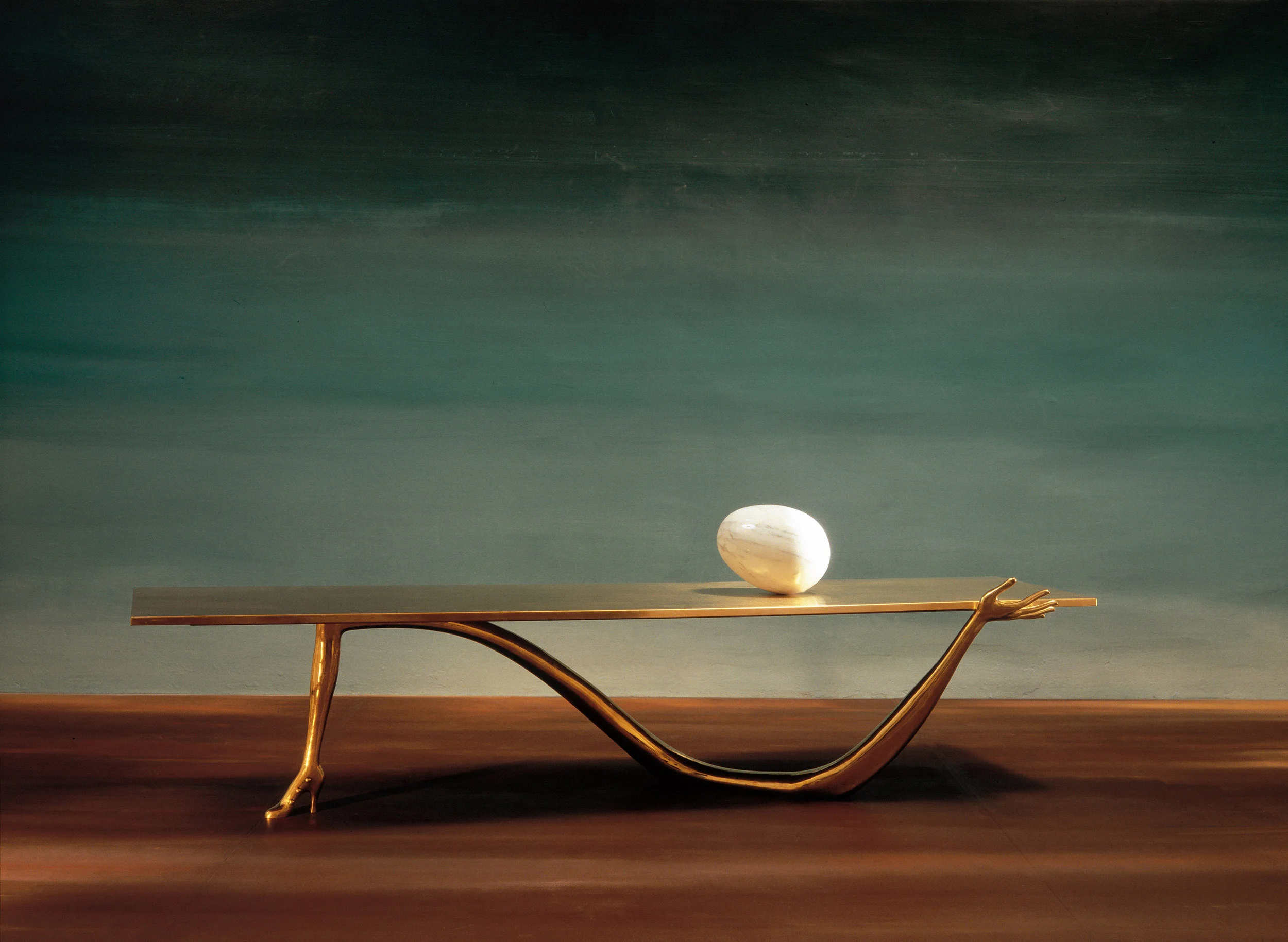
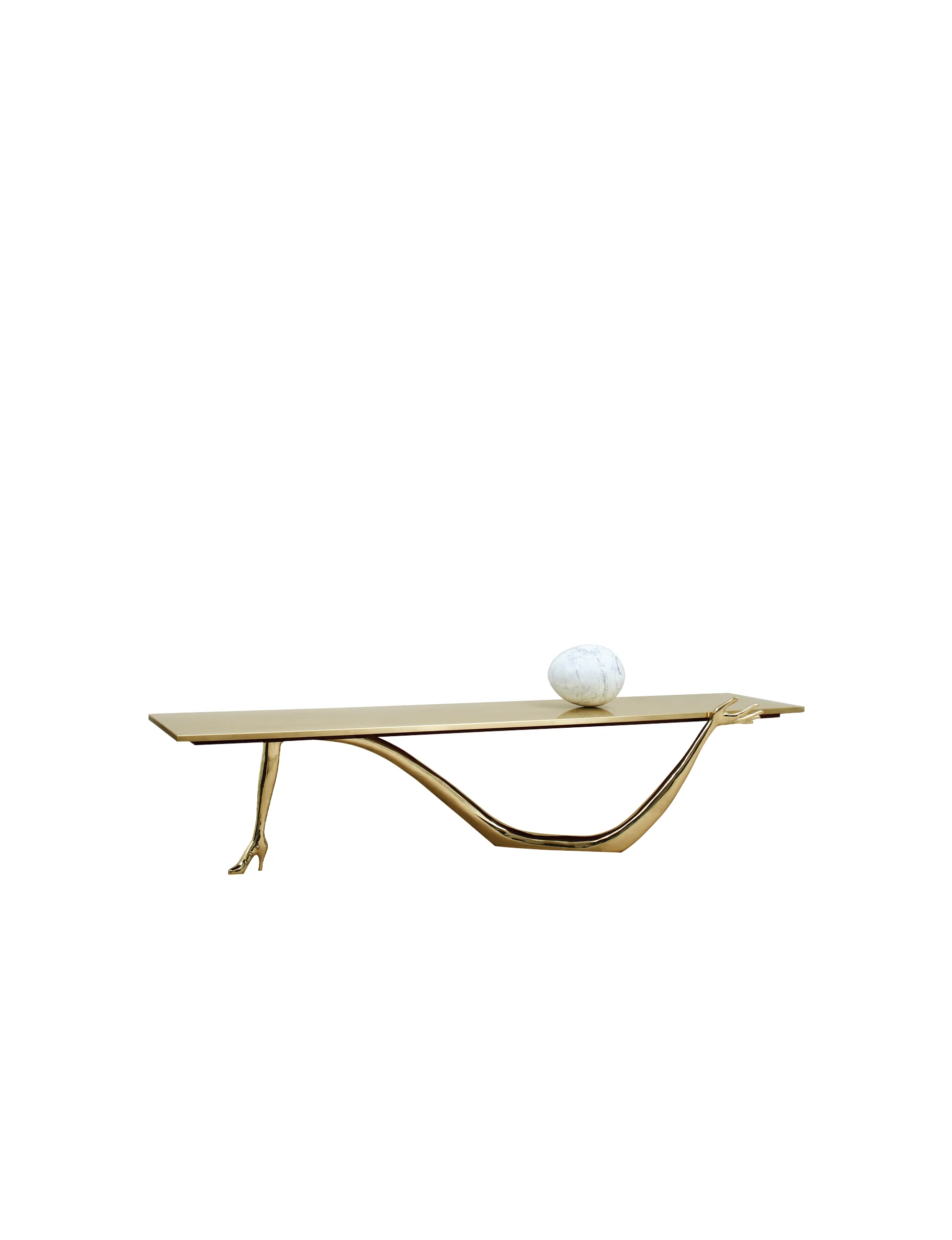
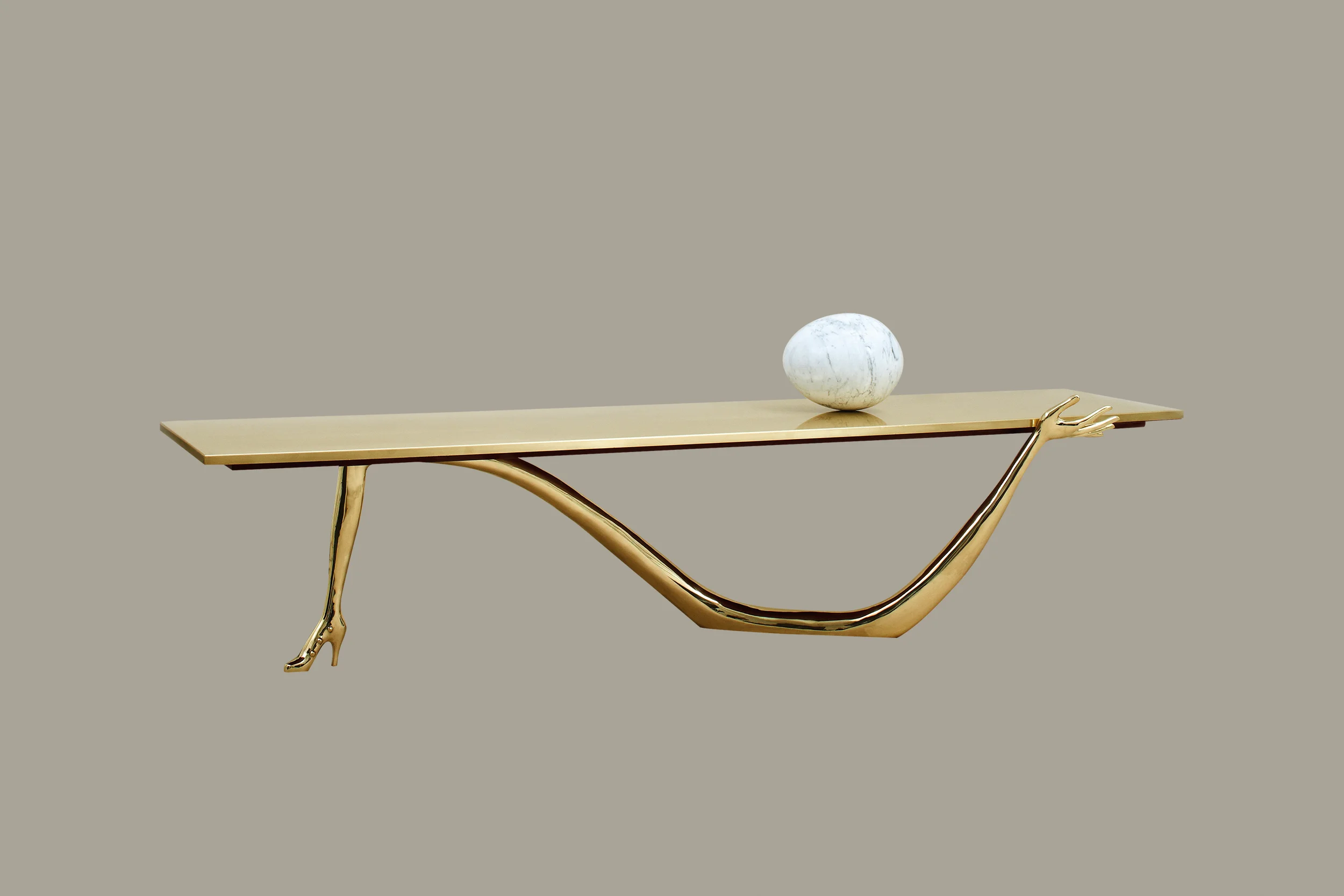
The LEDA LOW Table offers a direct, physical expression of Salvador Dalí’s Surrealist imagination, merging refined construction with an unmistakably fantastical vision. Both sculptural and functional, the table asserts a strong presence within its surroundings, operating at the intersection of design, symbolism, and material rigor

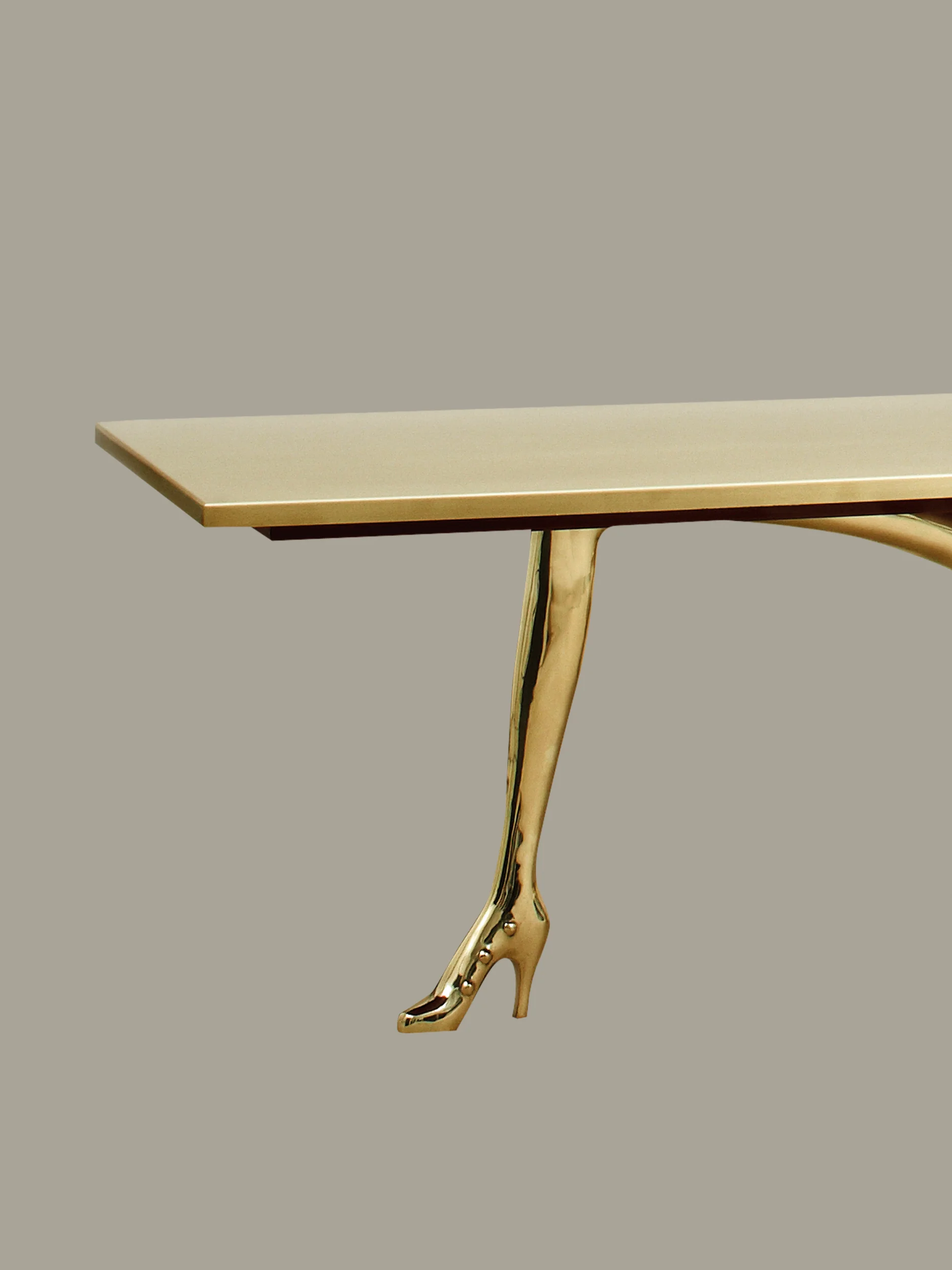
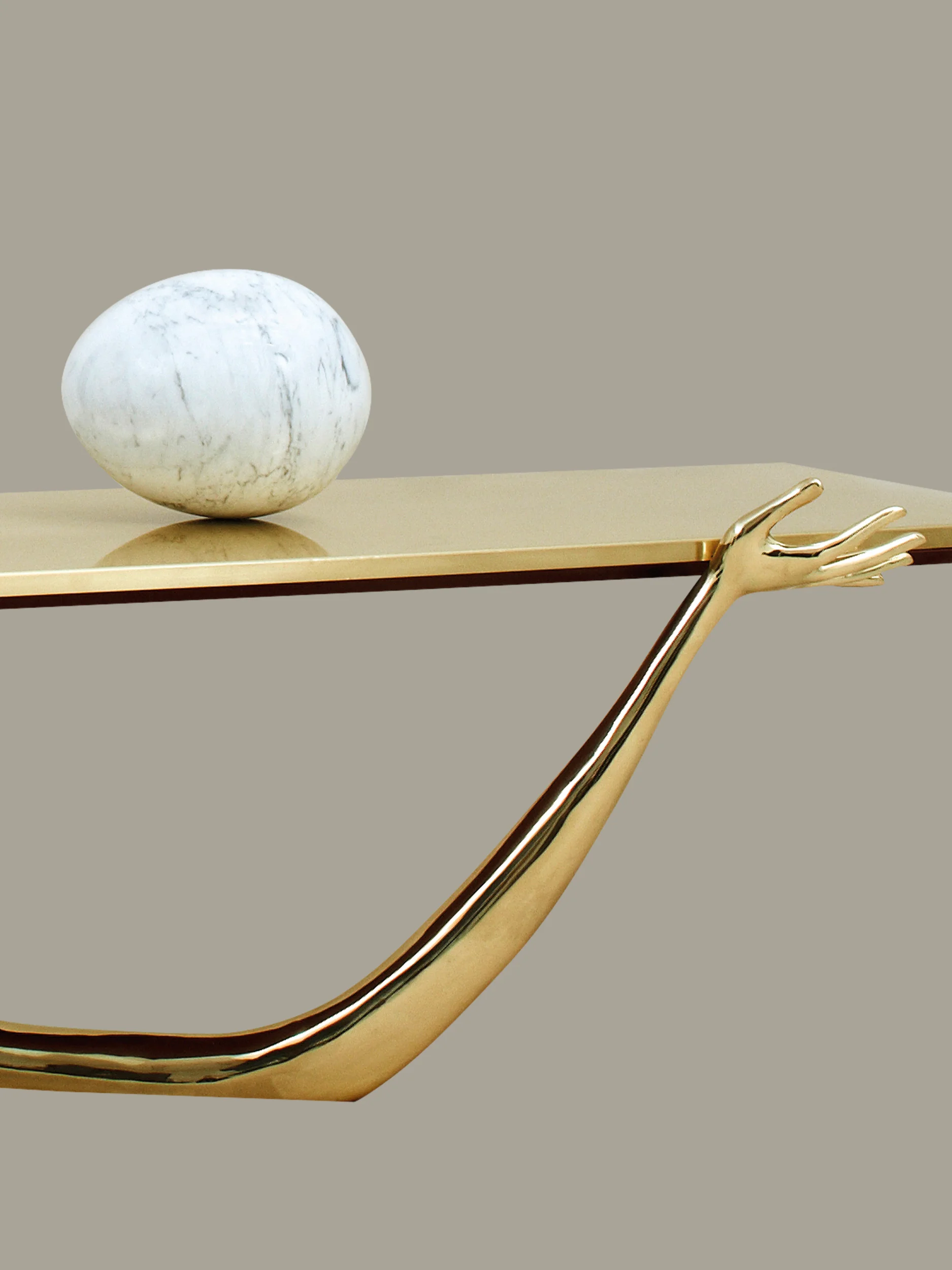
Inspired by Dalí’s painting Femme à tête de roses (1935), also known as Woman with a Head of Roses, the table translates the artist’s iconic imagery into three-dimensional form. A solid brushed and varnished brass top is supported by an anthropomorphic structure: a sculpted hand grips the surface, while a bent knee descends into a heeled foot, grounding the piece with a distinctly figurative tension. The composition reflects Dalí’s recurring treatment of the human body as both architecture and psychological landscape

Resting atop the surface is a marble egg, a recurring symbol in Dalí’s work associated with birth, transformation, and latent energy. This detail reinforces the table’s conceptual depth while introducing A moment of material contrast and symbolic focus

The LEDA Sculpture Table embodies Dalí’s dual nature—technical precision paired with Surrealist provocation—transforming a utilitarian object into a charged sculptural presence
VIEW SALVADOR DALÍ WORKS

STUDIOTWENTYSEVEN

Biography

Salvador Dalí

Born Figueres, Spain, 1904

A Spanish painter, sculptor, writer, and designer, Dalí was the most important figure of the Surrealist moment and among the most prolific artists of the twentieth century. He developed a singular visual language that fused hyper-precise realism with dream logic, drawing on psychoanalysis, symbolism, and obsessional imagery to explore time, desire, and the subconscious. The power and originality of his work is just as immediate and impressive today

While Dalí is best known for his paintings, his practice extended far beyond the canvas. He was deeply engaged with design and the applied arts, collaborating on furniture, interiors, jewelry, fashion, stage sets, and commercial objects. In 1930s Paris, Dalí surrounded himself with a circle of friends working in varied disciplines to move beyond the study of pictorial art. He collaborated with designers like Jean-Michel Frank to transform his imagery into three dimensional forms. Iconic works and his surreal interiors, some realized and others only conceived, reimagined everyday objects as psychologically charged forms infused with his signature glamour, wit, and existential humor , collapsing the boundary between art and design

In the 1990s, a team of experts led by architect and designer Oscar Tusquets brought Dalí’s sketches and designs to life. Working with Tusquets, a longtime friend of Dalí, the design firm BD Barcelona entered into a formal collaboration with the Gala–Salvador Dalí Foundation to act as the authorized editor, manufacturer, and steward of his design works, which it retains today

In discussing the process of creating editions of Dalí’s unrealized and unique works, Tusquets explained, “Dalí filled entire notebooks with sketches for various furniture designs he would have like to see in the cinema, used as advertising props or have in his own house. These were strange objects, high in symbolic content and with refined forms, which he would have enjoyed having around him. Salvador and I discussed the possibility of producing some of those Surrealist designs, which, for various reasons, he had been unable to make. From the hundreds of drawings in the archives of his foundation, BD began the production of a series of the most viable items of Dalí’s furniture

Rather than treating Dalí’s concepts, drawings, and prototypes as historical curiosities, BD Barcelona approaches them as functional design works, translating Dalí’s conceptual and sculptural ideas into collectible objects suitable for contemporary interiors. BD Barcelona has played a key role in preserving, contextualizing, and disseminating Dalí’s design legacy internationally, presenting his furniture in museums, galleries, and design fairs as part of the canon of 20th-century design history

STUDIOTWENTYSEVEN