BY STEPHEN ANTONSON
PLASTER
STEEL STRUCTURE
| IN | H | 32 | Ø | 50 | ||||||
| CM | H | 81.3 | Ø | 127 |
CUSTOM SIZE OR COLOR ON REQUEST
HANDCRAFTED IN AMERICA
DETAILS
BIOGRAPHY
DOWNLOAD PRODUCT INFO
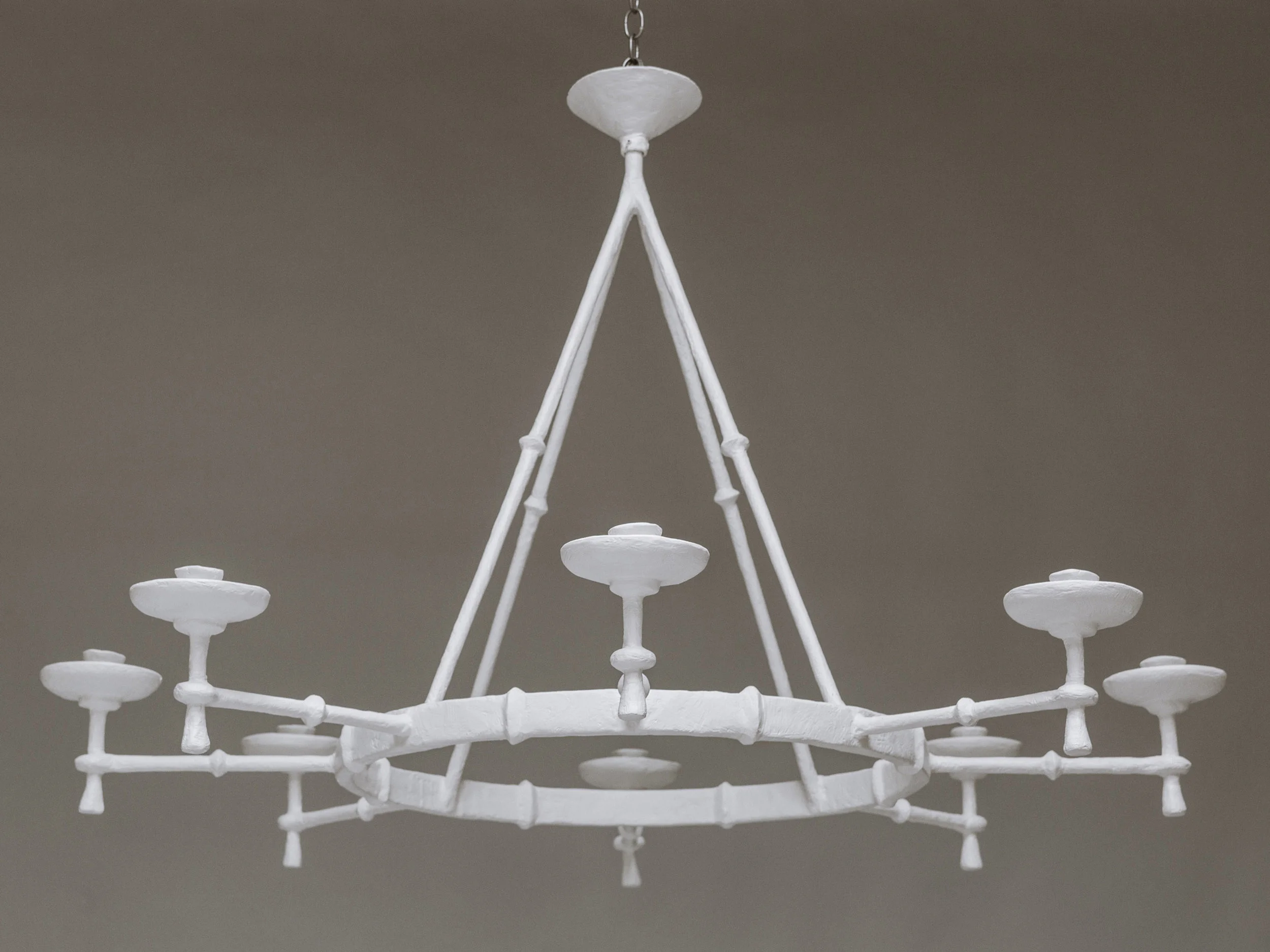
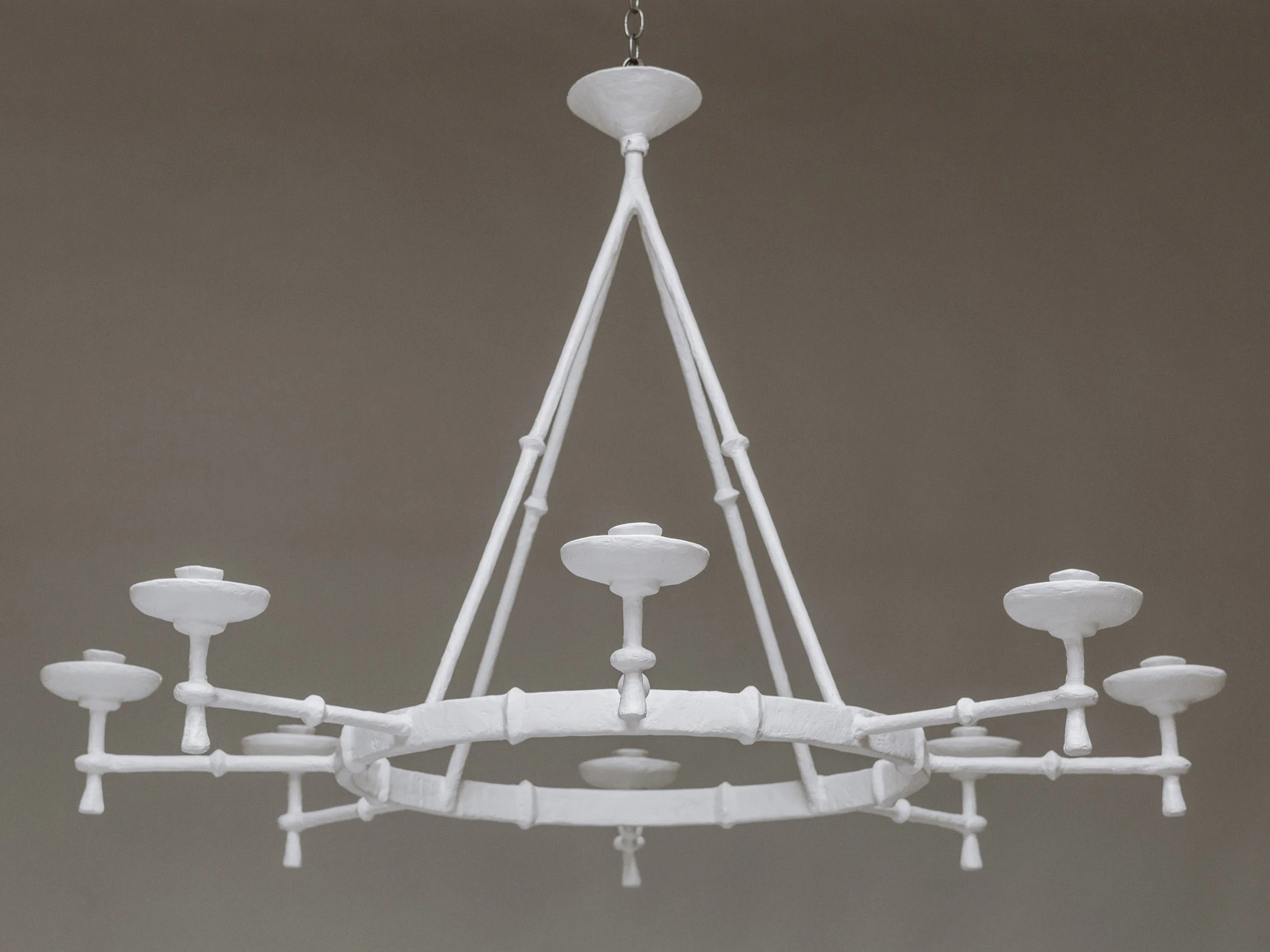
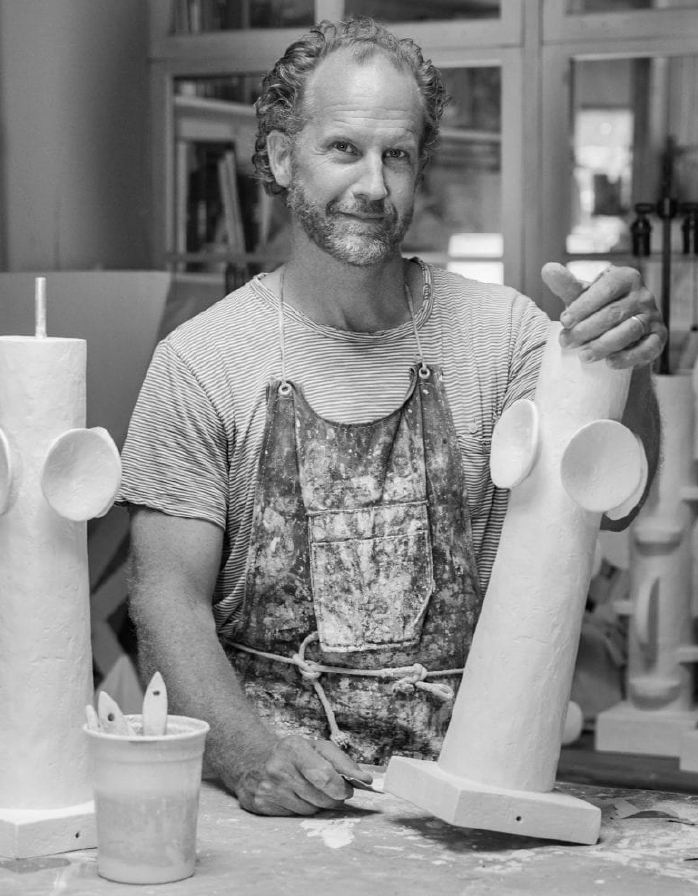
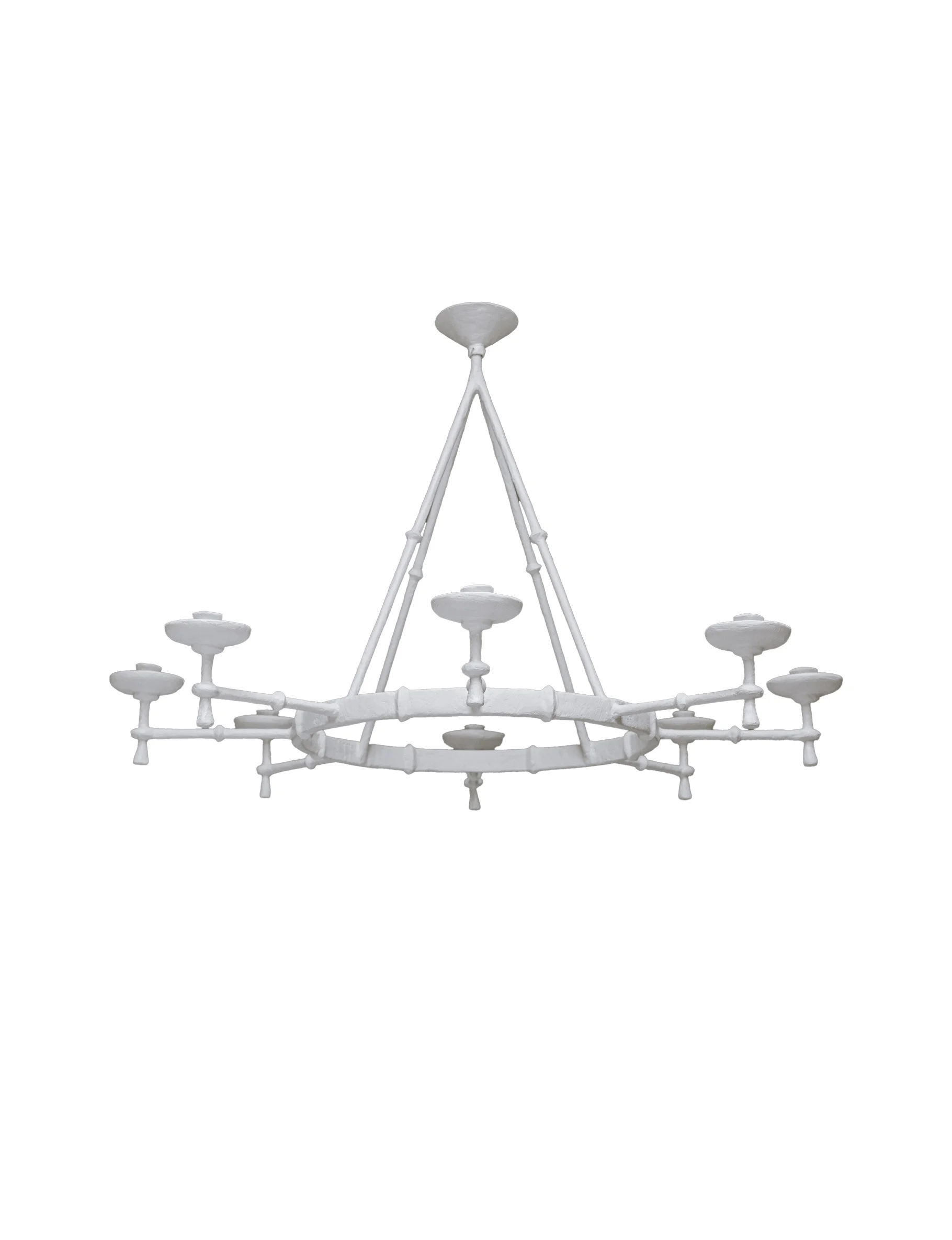
The Charles Chandelier draws its structure from the blacksmithed iron chandeliers once suspended in the great halls of medieval castles, objects defined by mass, shadow, and the gravity of forged metal. Antonson adopts their underlying logic, a network of hand-forged forms joined into a commanding armature, then quietly overturns their expectations
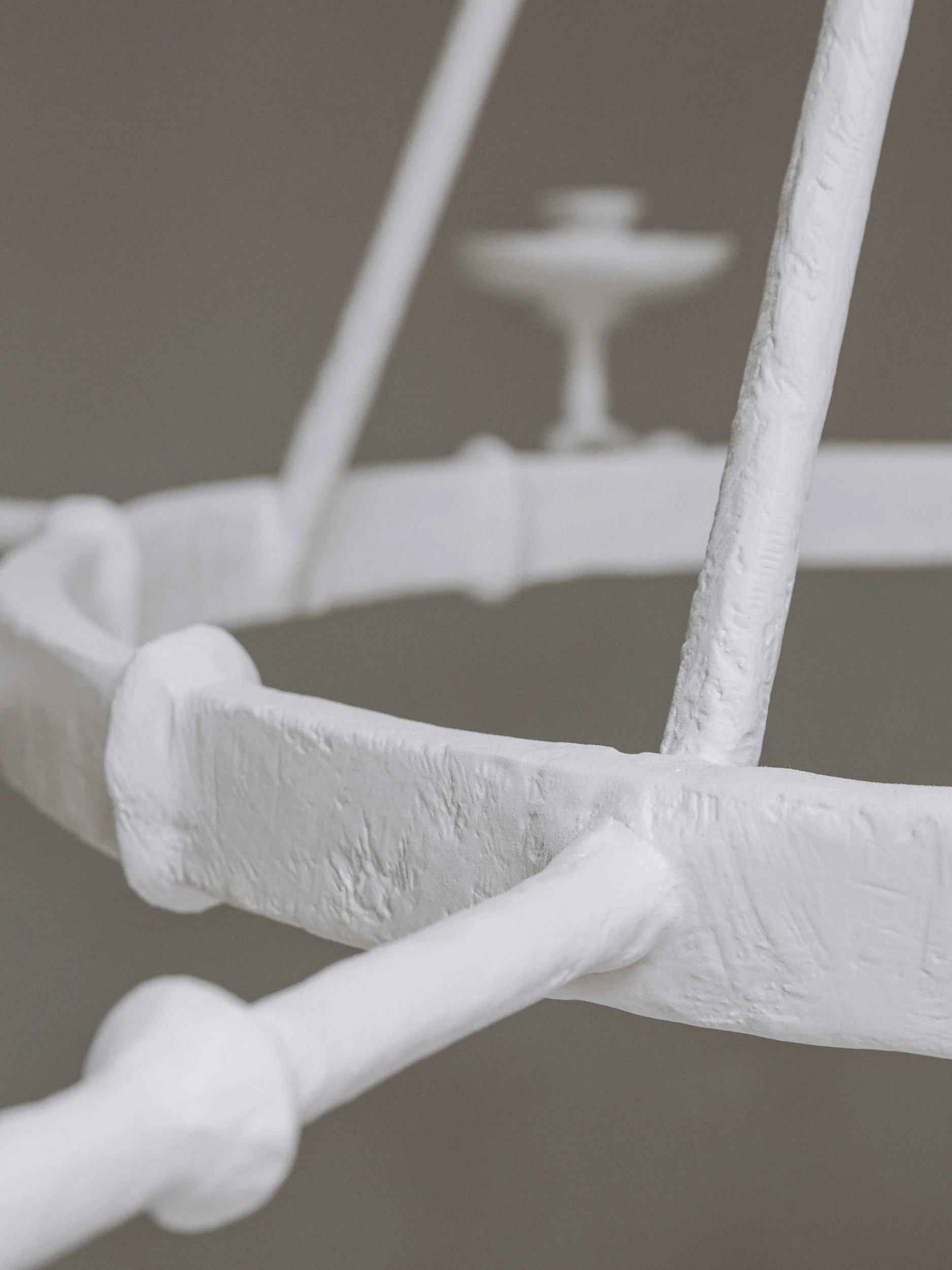
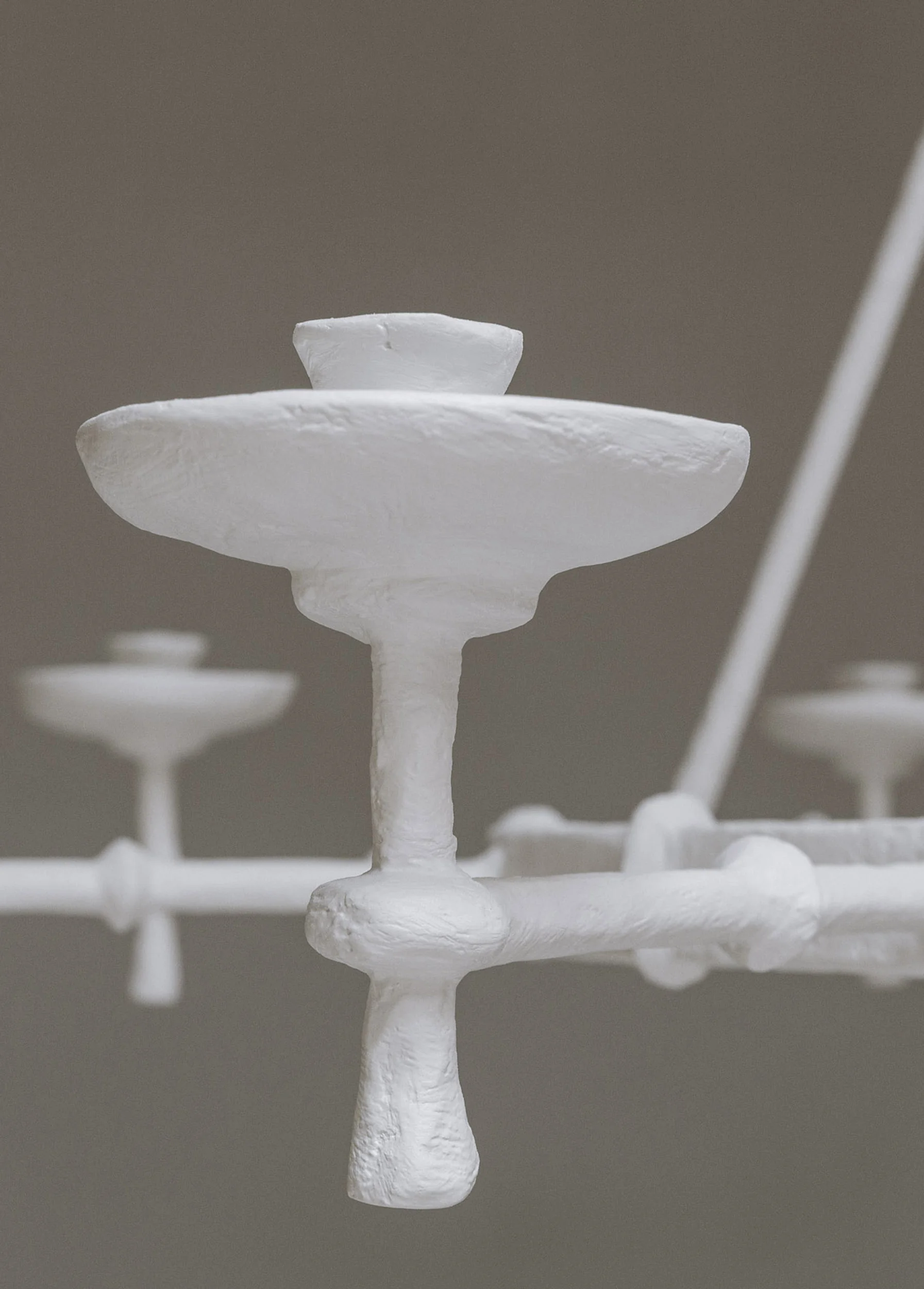
Rather than amplifying heft, the chandelier inverts it. What would traditionally be dark, heavy, and imposing is rendered visually light, its presence clarified and refined. The armature retains the memory of forging and structural necessity, but its expression is transformed through a crisp, white knifed plaster surface. Edges are sharpened, volumes pared back, and shadow gives way to luminosity
This reversal shifts the chandelier’s character entirely. The Charles no longer dominates through weight or darkness, but through precision and restraint. Its whiteness lifts the form into the air, allowing it to occupy space without burdening it. The work reads as architectural rather than ornamental, a skeletal framework made legible and elegant
In this way, the chandelier bridges eras. Medieval construction methods and silhouettes are not discarded, but reinterpreted through a contemporary sensibility that values clarity over mass. The Charles Chandelier stands as a study in transformation, where historical gravity is translated into modern lightness, and where the memory of iron survives in a form that appears almost to float