BY STEPHEN ANTONSON
PLASTER
STEEL STRUCTURE
| IN | H | 28 | Ø | 48 | ||||||
| CM | H | 71.1 | Ø | 121.9 |
CUSTOM SIZE ON REQUEST
HANDCRAFTED IN AMERICA
DETAILS
BIOGRAPHY
DOWNLOAD PRODUCT INFO
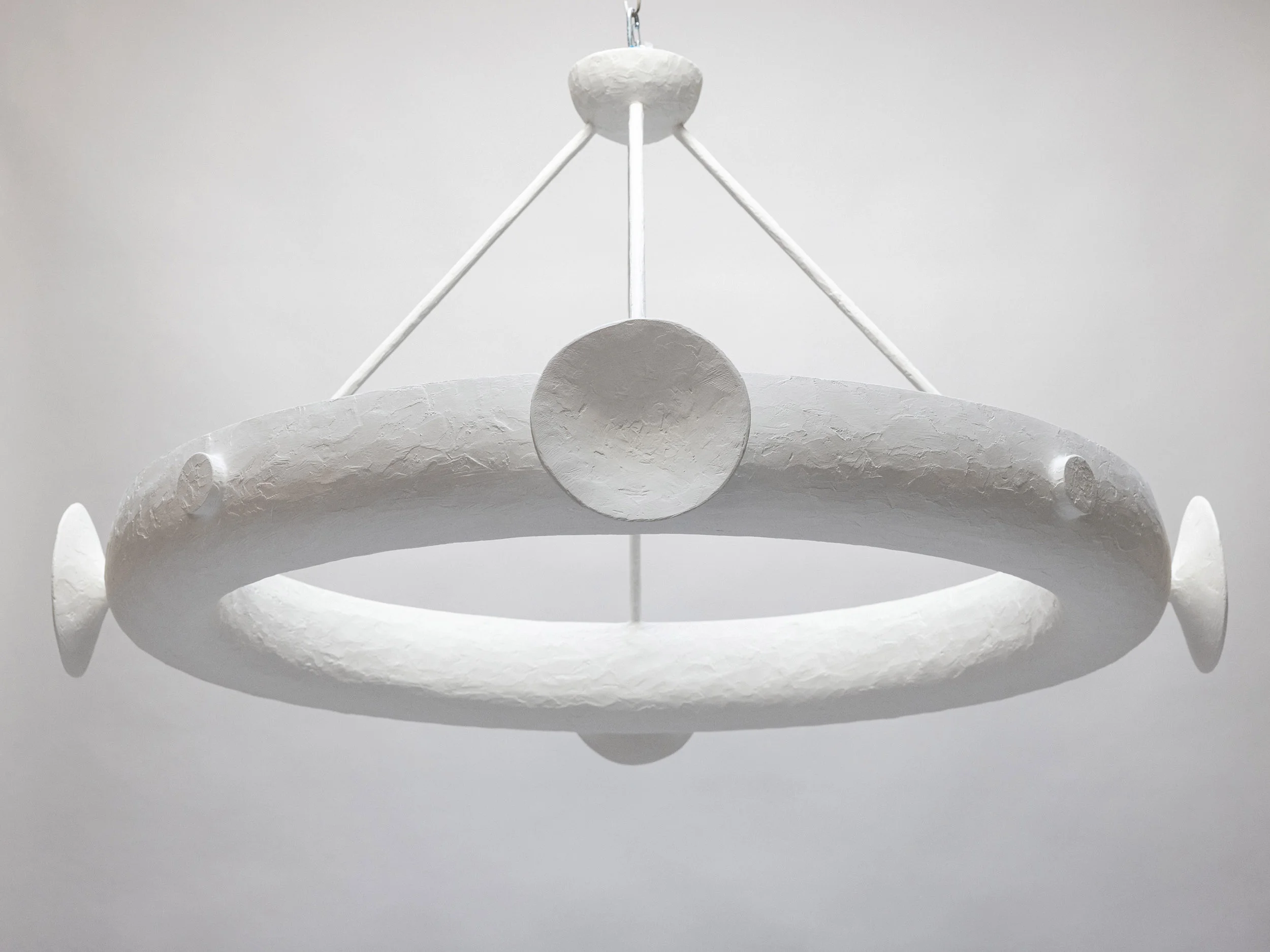
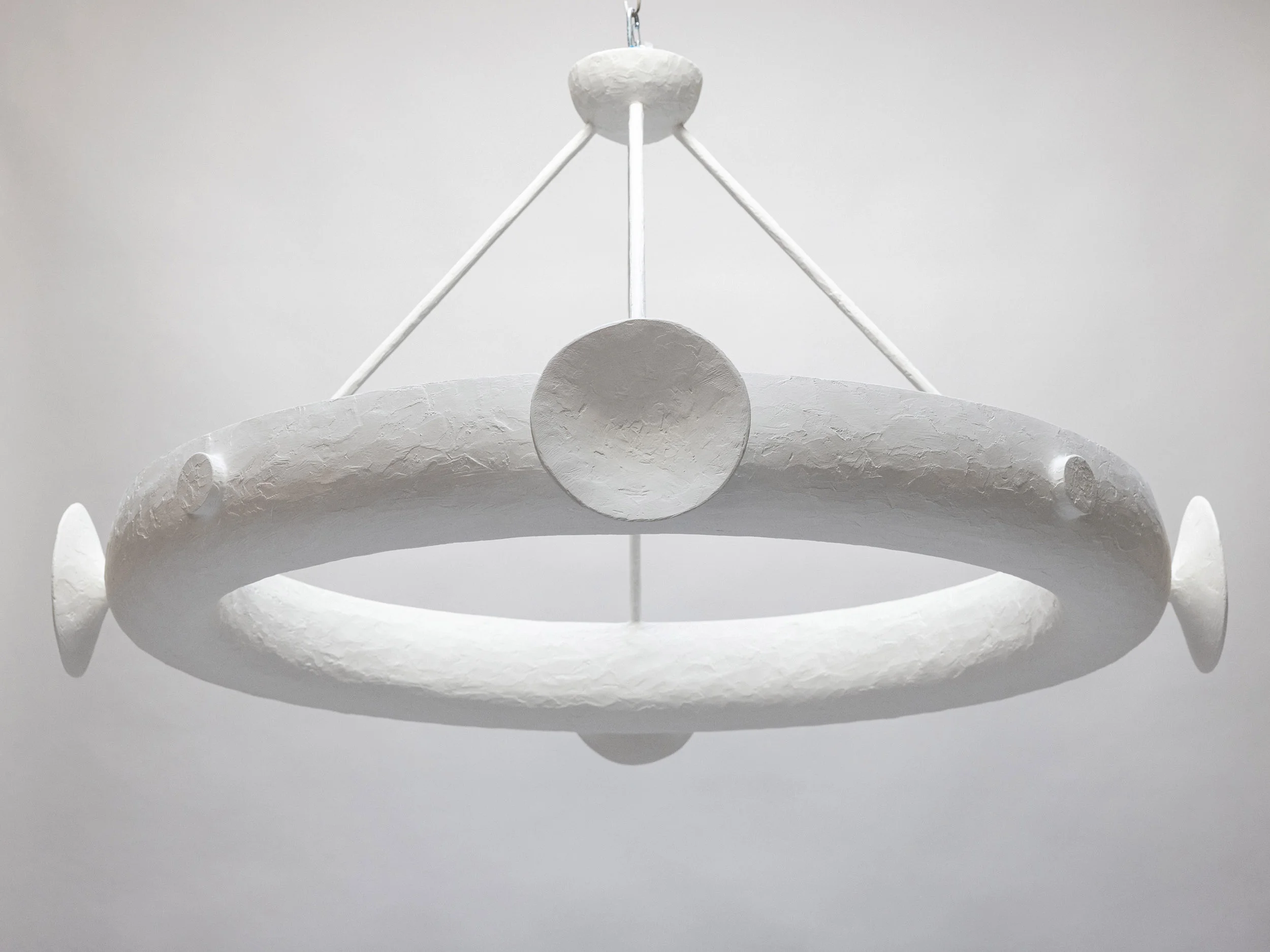
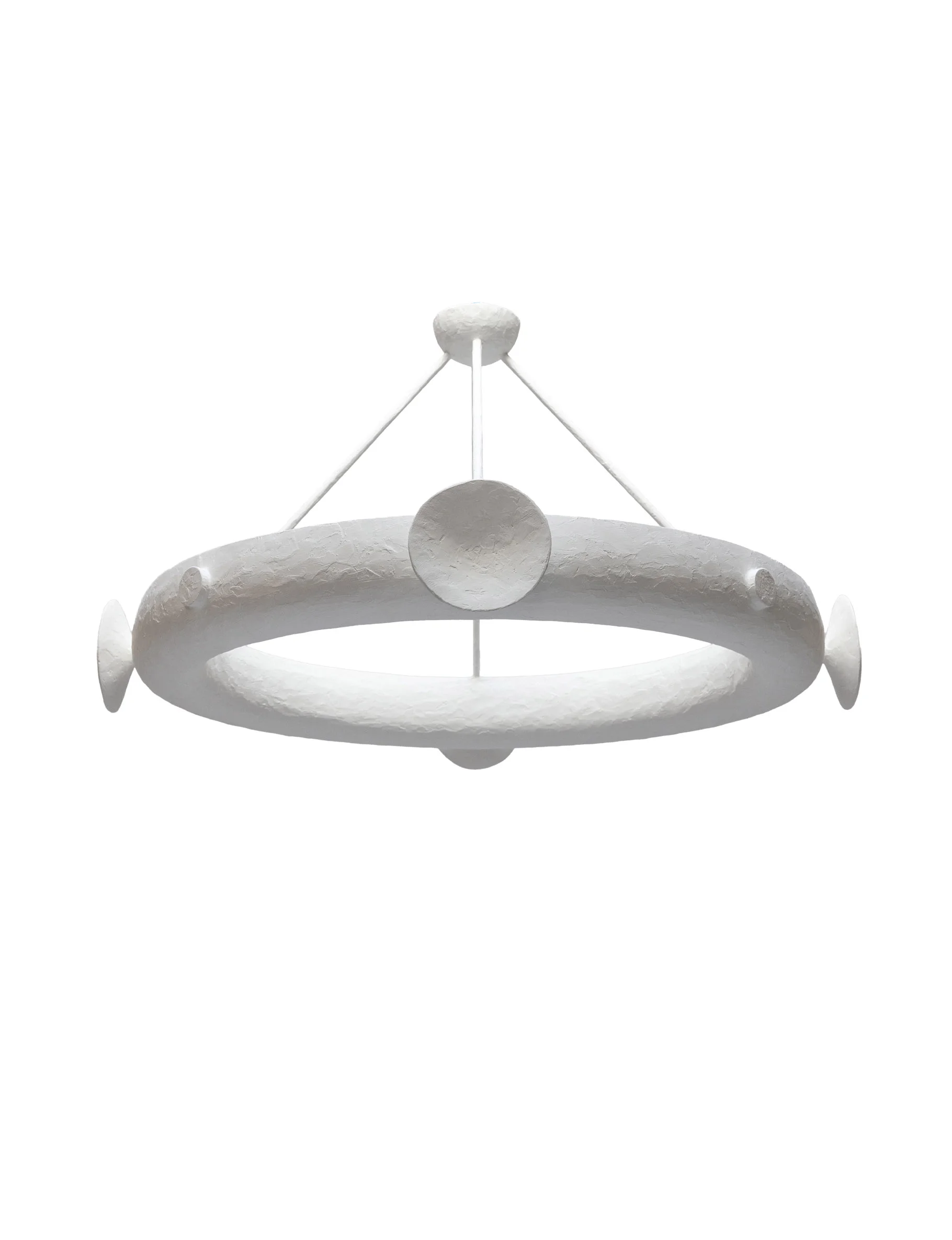
The Ovid Chandelier takes its name and its structure from the logic of ancient Roman poetry and form. Like the verses of Ovid, it unfolds through repetition and transformation rather than declaration. Instead of leveraging the spoken word, the chandelier leverages the poetry of curved surfaces
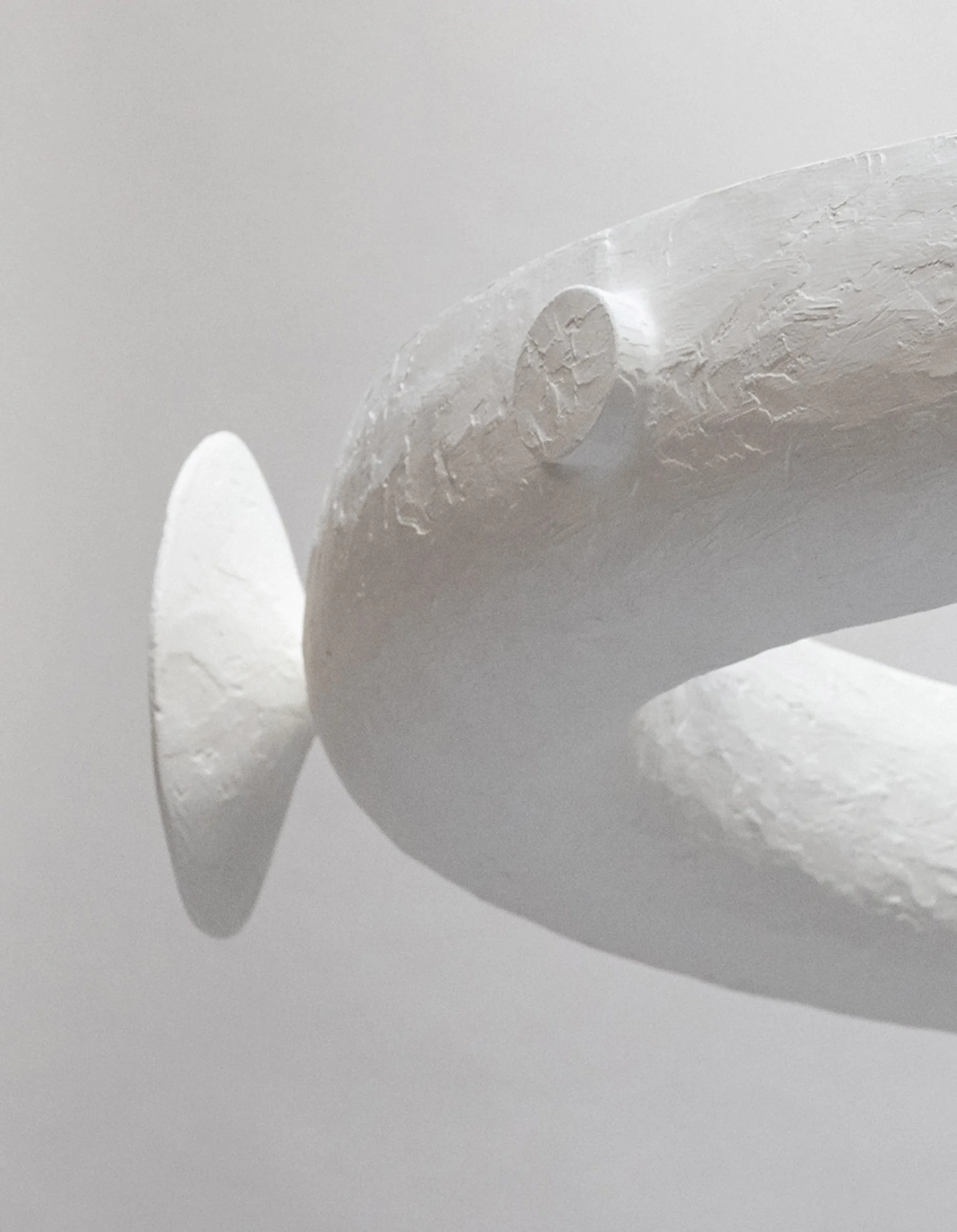
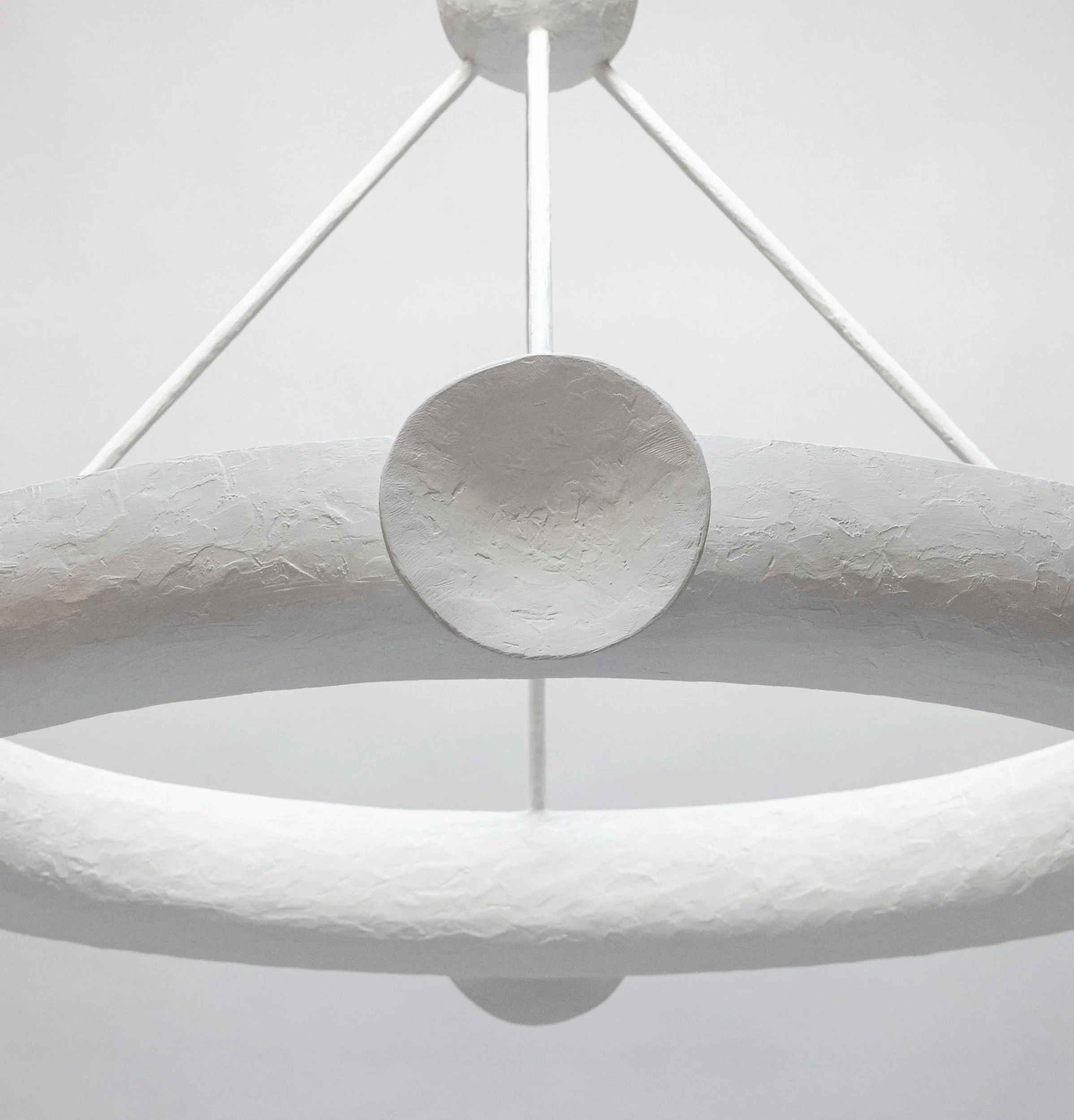
Antonson builds the chandelier around a central ring, a form deeply embedded in Roman visual culture. Without hierarchy or a single point of emphasis, it recalls the circular geometries of Roman temples and civic architecture. Along this ring, concave and convex elements alternate and shift in scale, creating a measured cadence that moves fluidly, much like poetic meter translated into volume
These curved elements evoke the Roman mastery of mass and void. Hollowed recesses sit beside swelling projections, producing a dialogue that mirrors Roman architectural principles, where structure is shaped as much by absence as by solidity. The eye follows these transitions instinctively, circling the form again and again, never arriving at a fixed conclusion
Light activates this ancient logic. It travels along the inner curve of the ring, gathering in concavities and softening across convex surfaces, emphasizing depth and thickness rather than spectacle. As one moves beneath or around the chandelier, the composition shifts continuously, much like a line of verse that reveals different emphases with each rereading
In the Ovid Chandelier, Antonson evokes antiquity without illustration. Roman poetry and architecture are not quoted but reanimated into a contemporary object that privileges flow over statement, continuity over climax, and form itself as a vessel for meaning